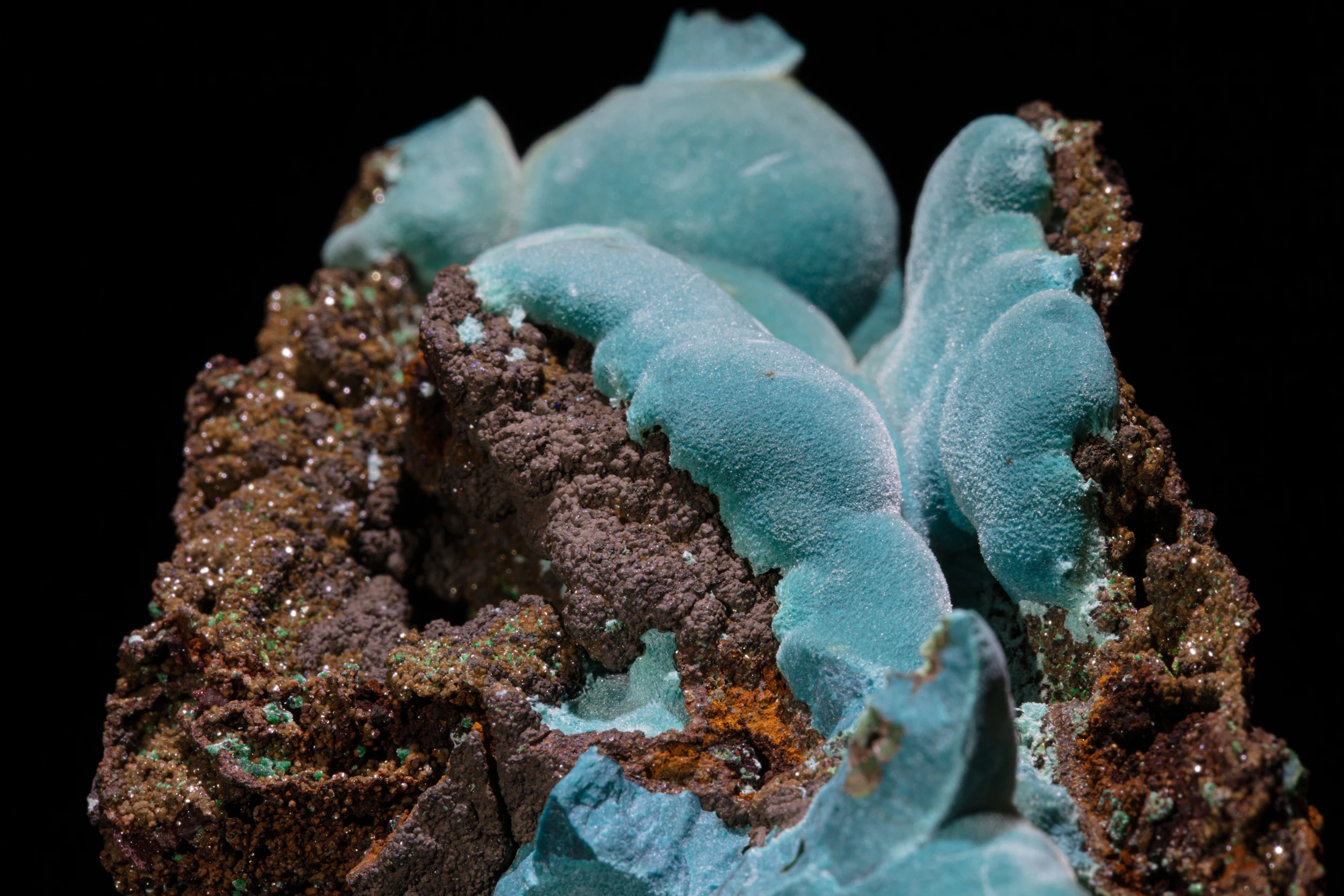
Rosasite

The Specimen

Cabinet: Small Cabinet (4.5 - 7 cm) – Size: 7.0 x 5.6 x 4.2 cm Origin: Ojuela Mine, Mapimí, Mapimí Municipality, Durango – Mexico

Notes

This specimen comes from the Ojuela Mine near Mapimí, in Durango, northern Mexico. Spanish prospectors found the deposit in 1598 after noticing iron-stained outcrops on the canyon walls, and the mine grew to nearly 450 km of tunnels. Its suspension bridge, finished in 1898, was then the third longest in the world. Collectors know Ojuela best for its arsenate minerals, such as adamite and legrandite.
Rosasite is a copper zinc carbonate. It forms in the weathered upper part of ore deposits, often as rounded, velvety balls.
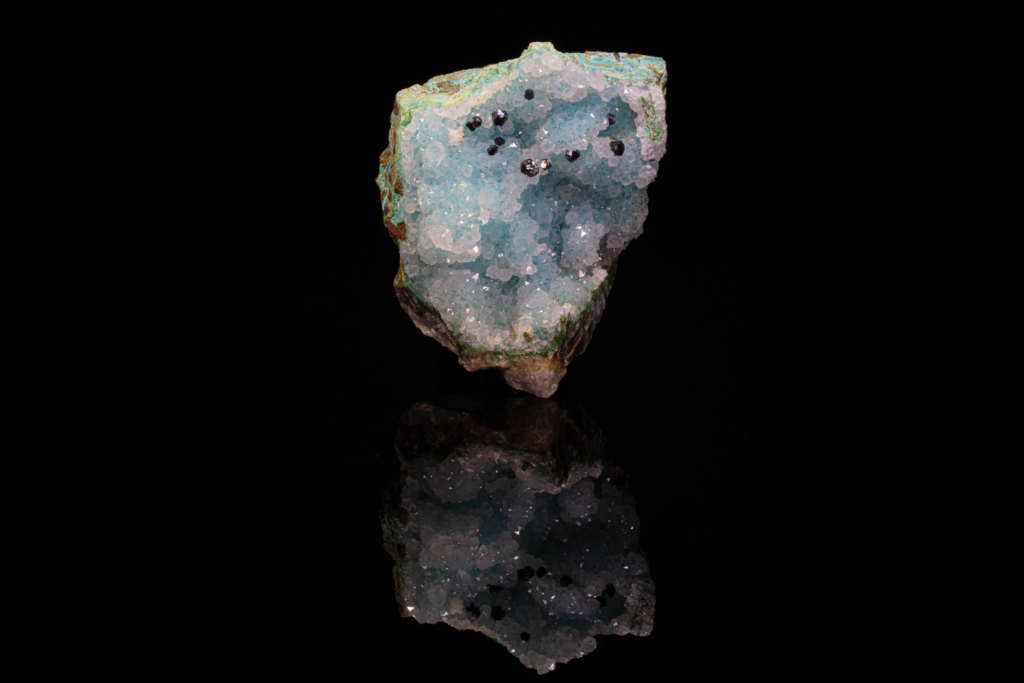
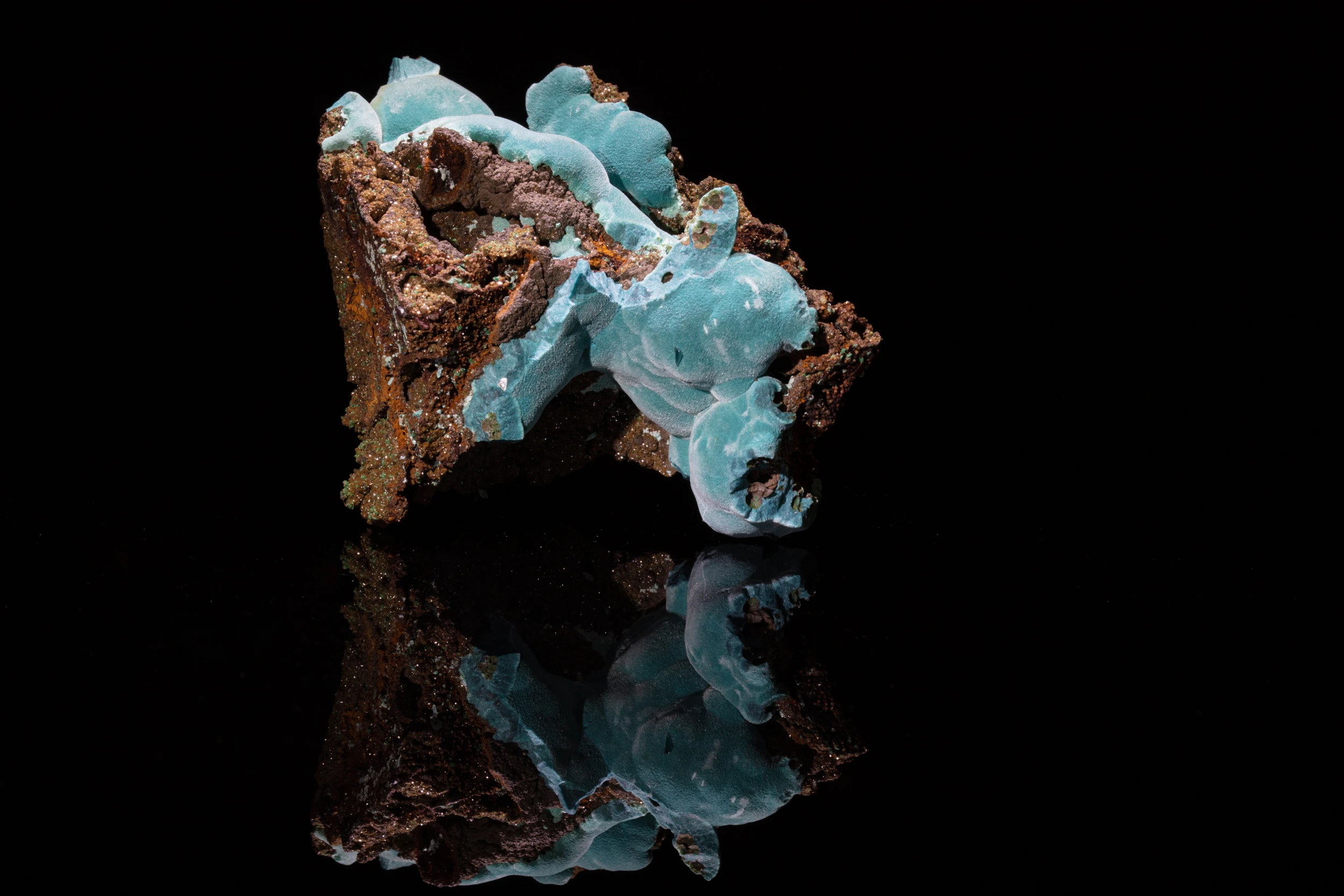
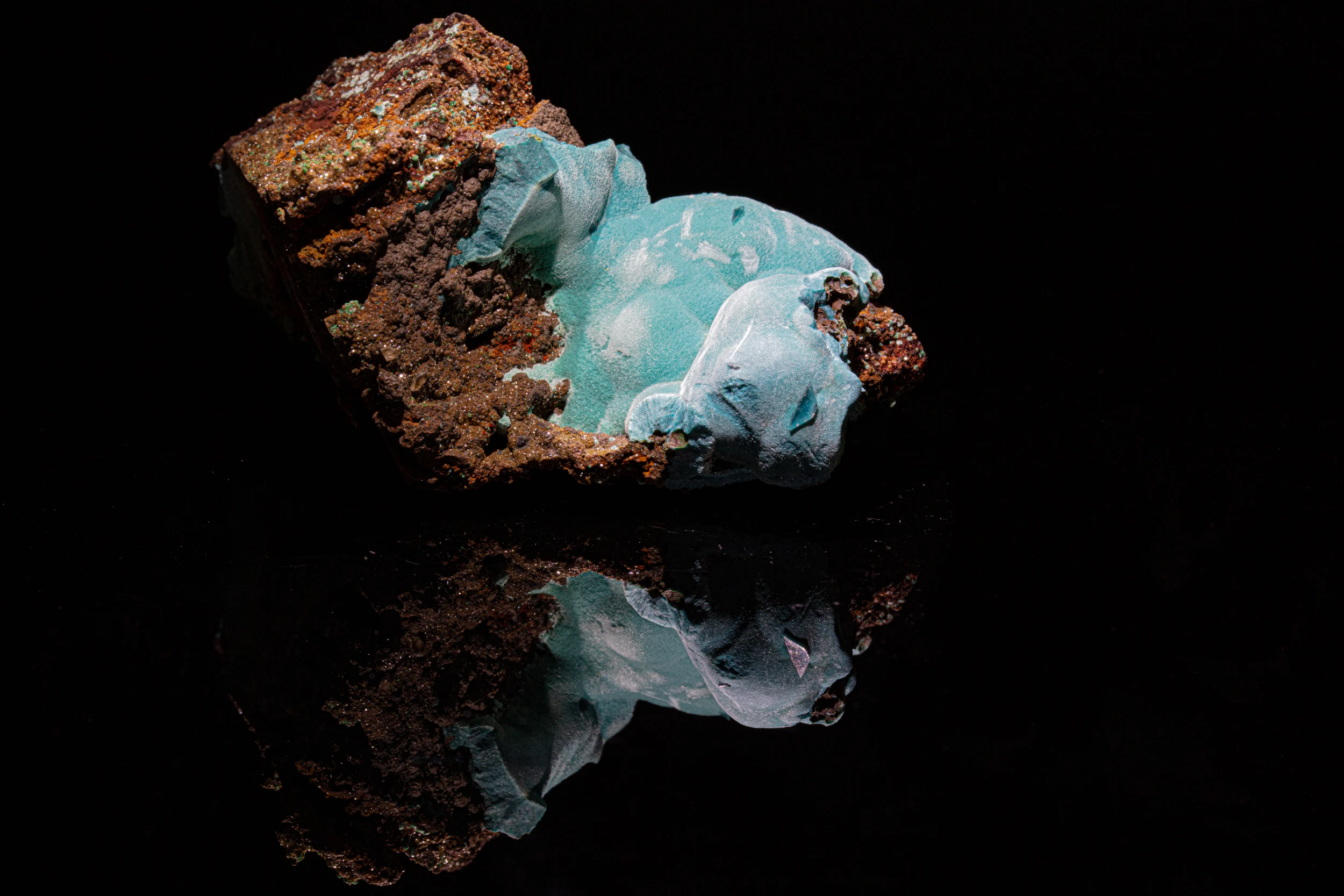
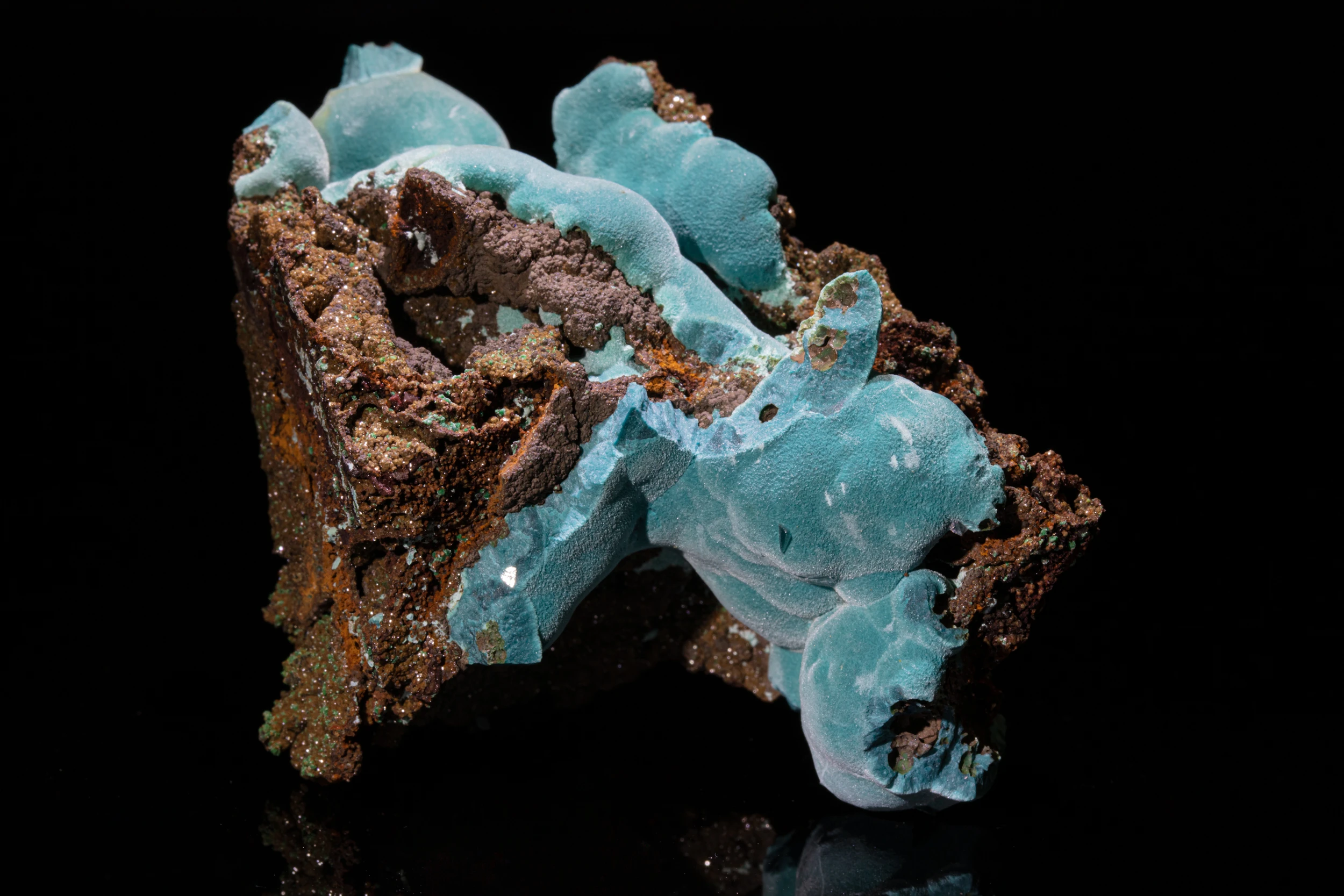
Here, velvety blue-green rosasite covers one side of a rusty brown gossan, the iron-rich rock that caps an ore body. The rosasite forms rounded, overlapping lobes made of tiny radiating fibers. According to the dealer, the piece also carries a little calcite: the small glittering crystals scattered on the brown matrix are probably that calcite.

Mineral Species

Did you know?

RosasiteMost minerals take ages to form in untouched rock, but rosasite can be a child of mining itself. Some of it is post-mine, crystallizing inside the tunnels only after miners had opened the deposit to air and water.

CalciteLook through a clear rhomb of Iceland spar calcite and the world doubles, split into twin images by the crystal's double refraction. Some researchers think Norse sailors used this very effect to find the sun through cloud, the so-called sunstone, though the idea remains a debated hypothesis.