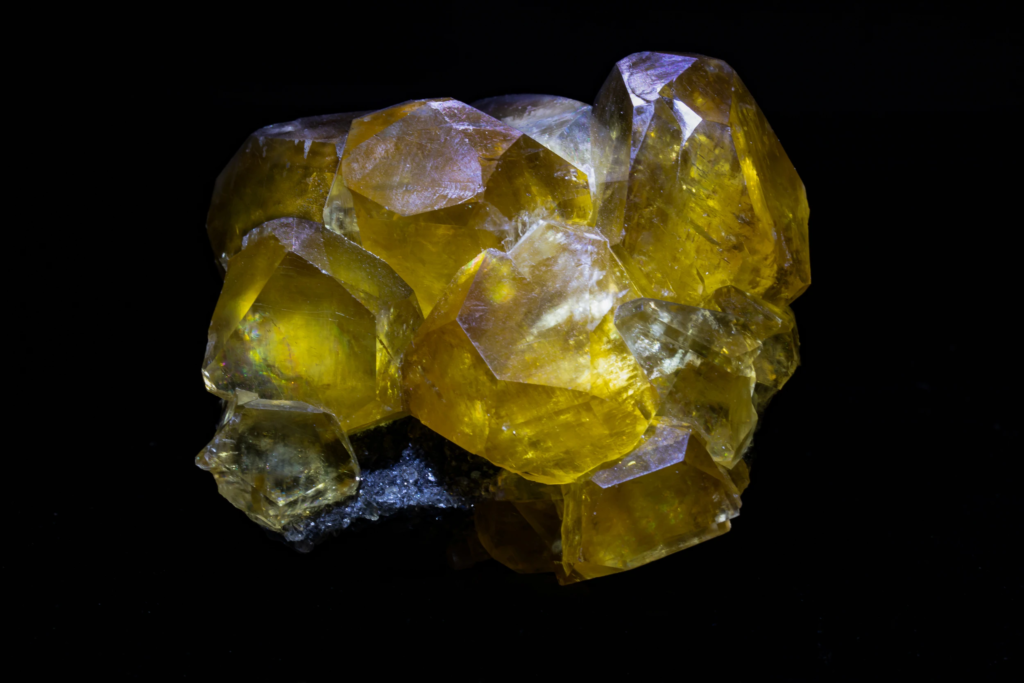
Cleavelandite, Lepidolite & Rubellite
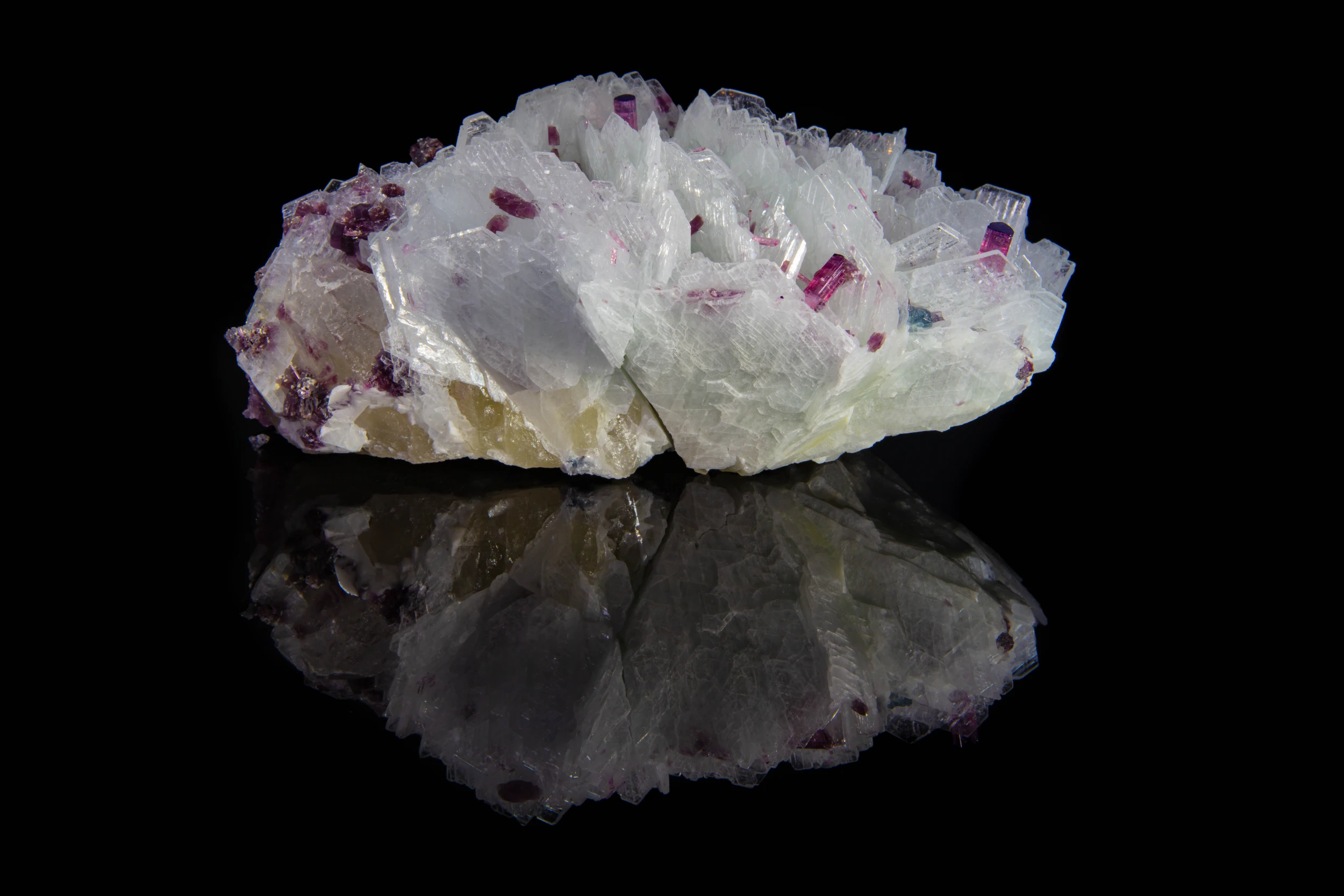
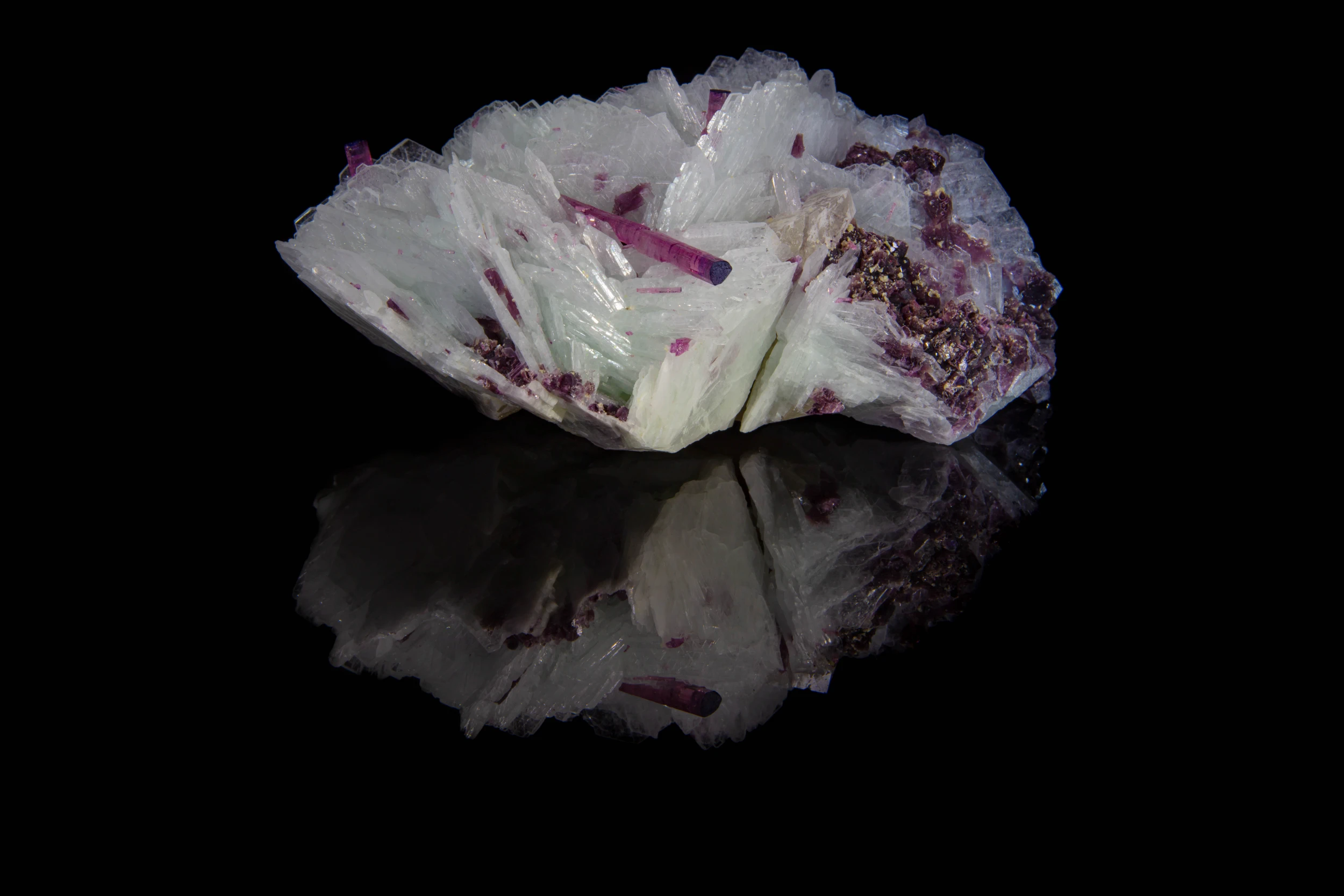
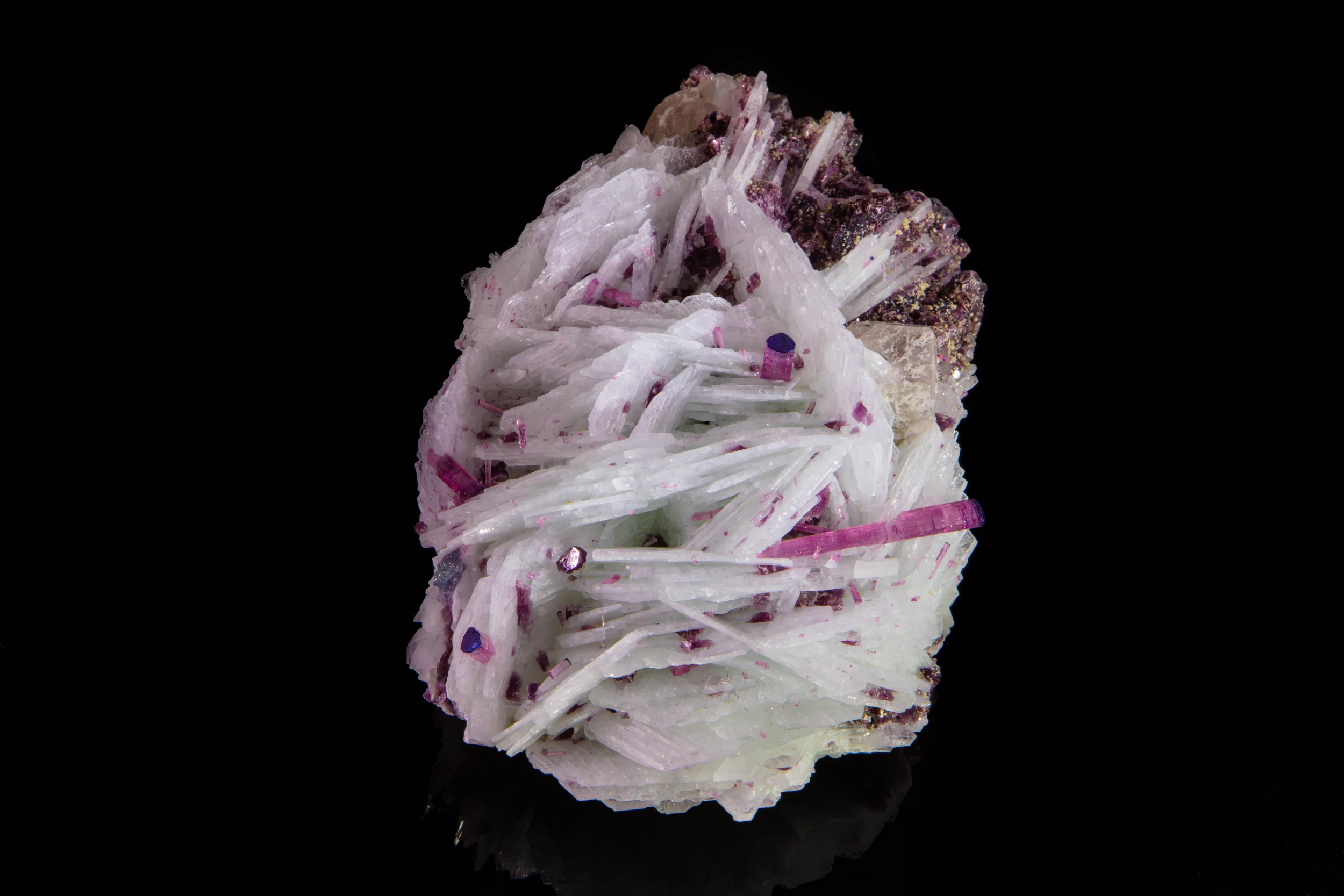
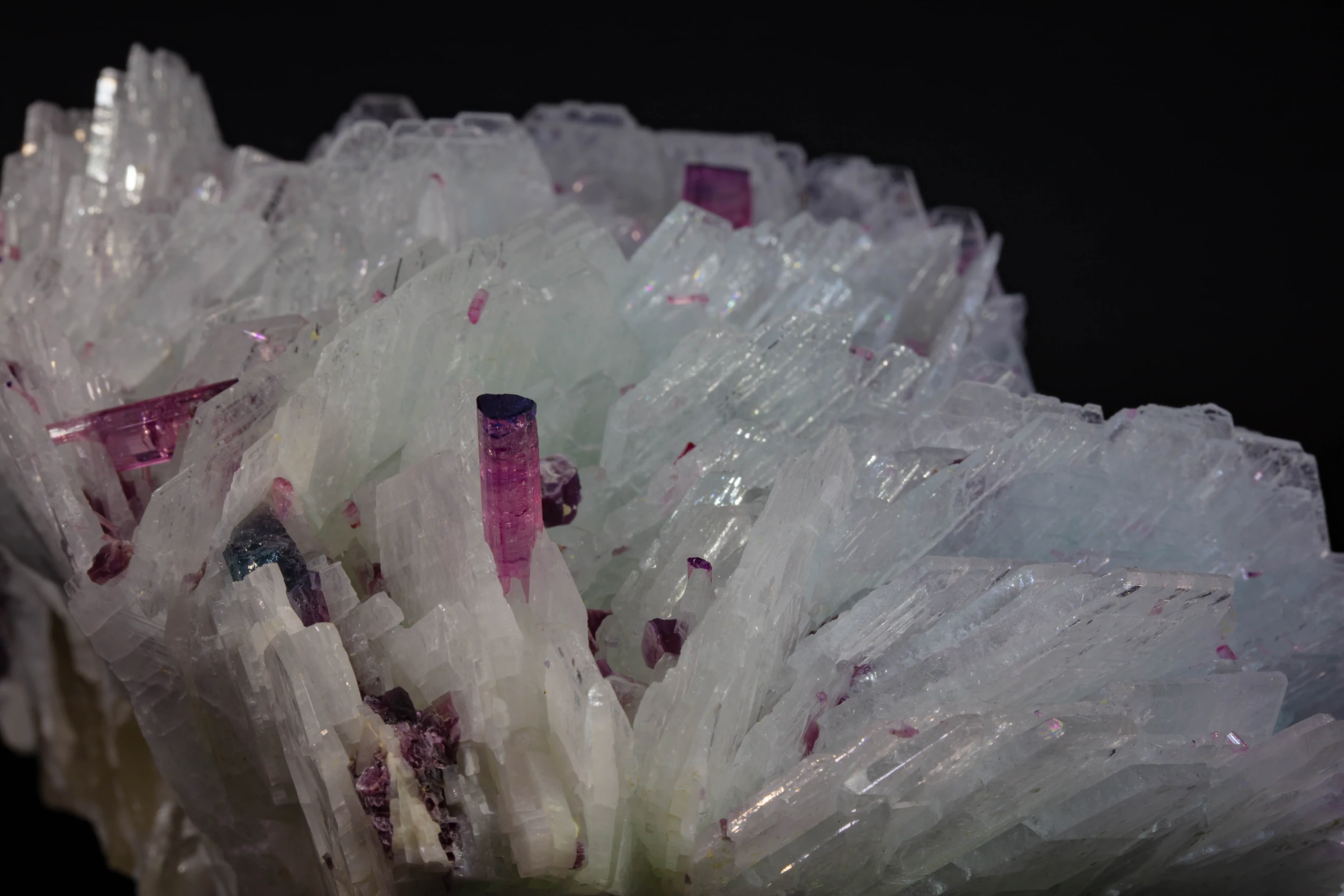
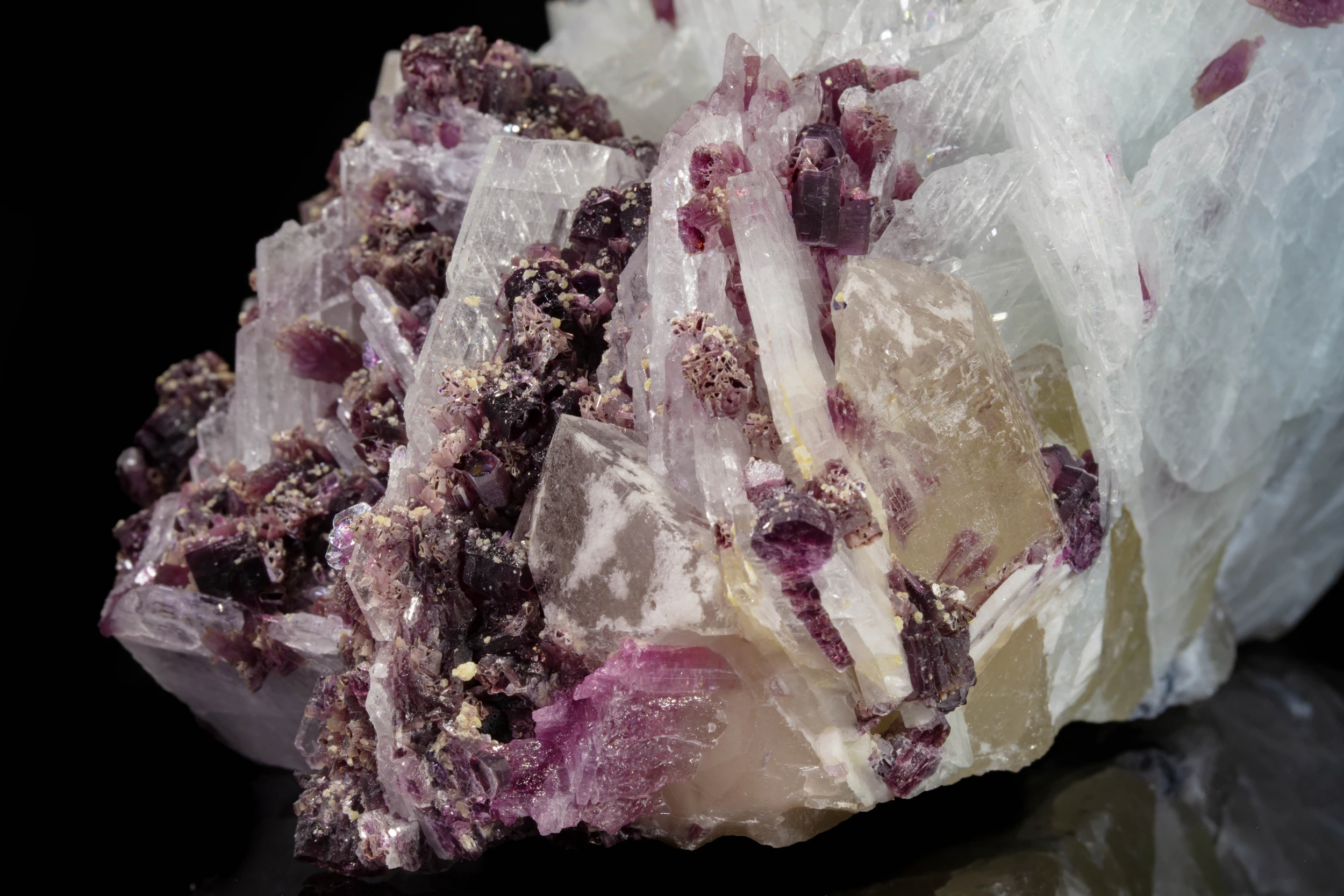
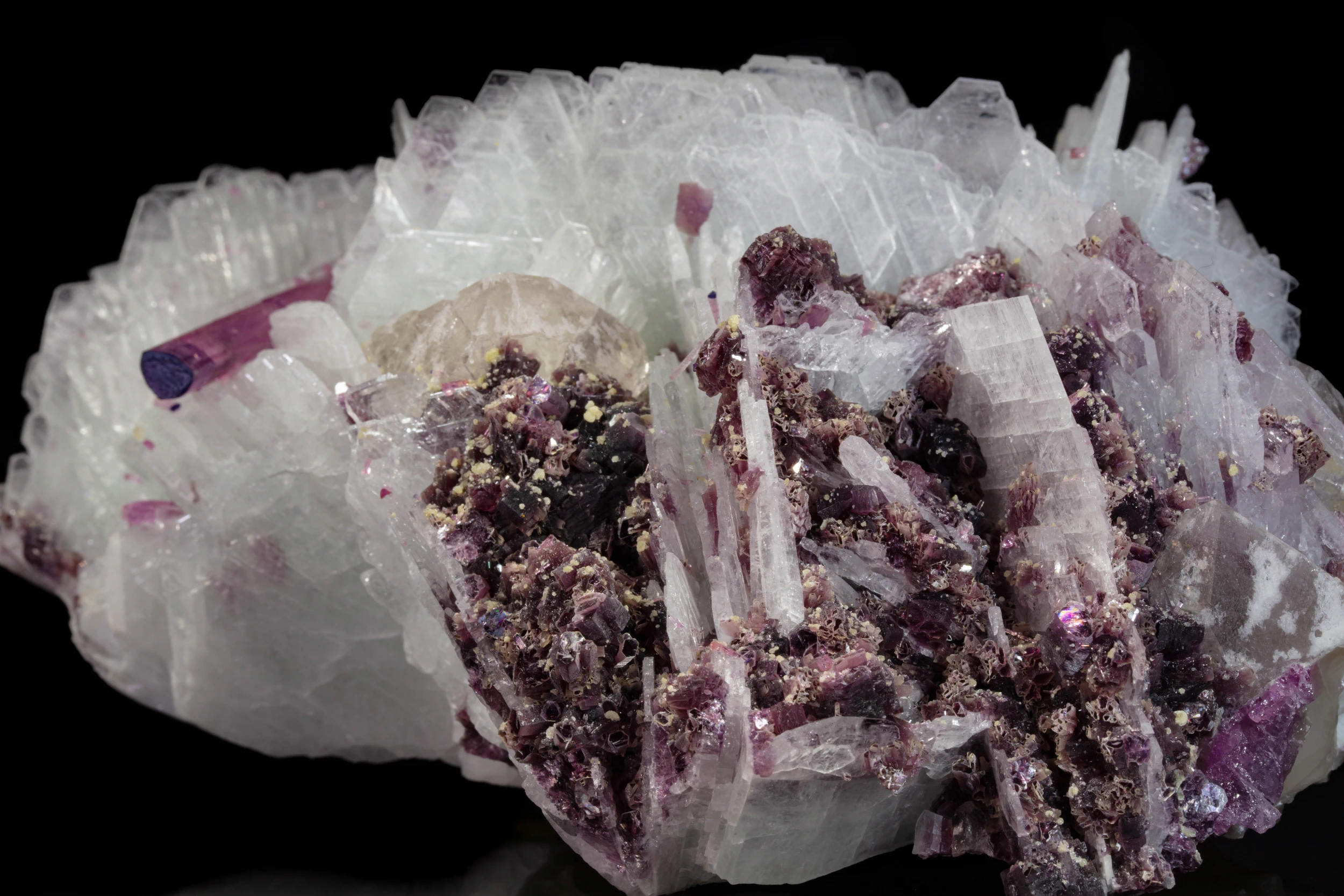
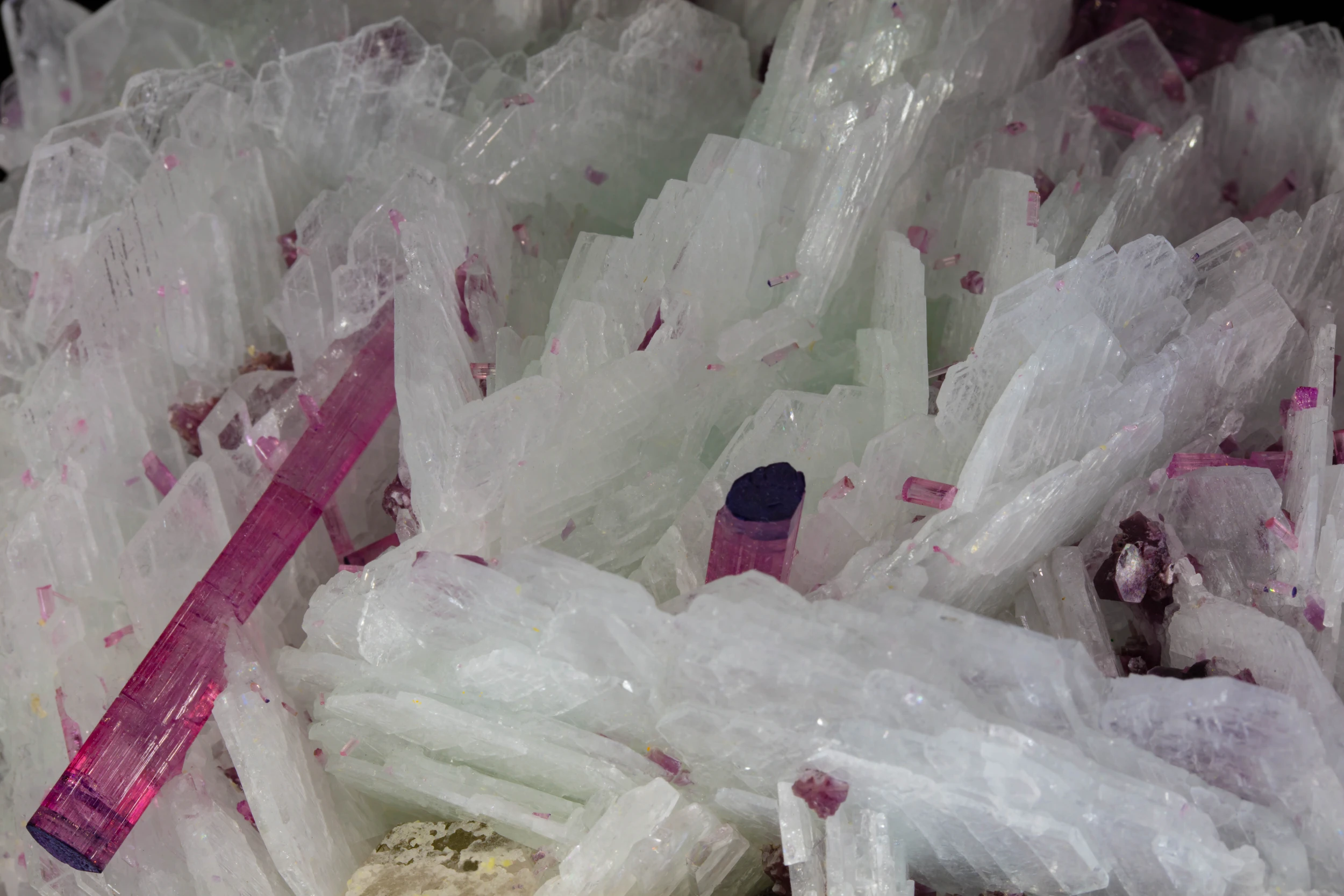
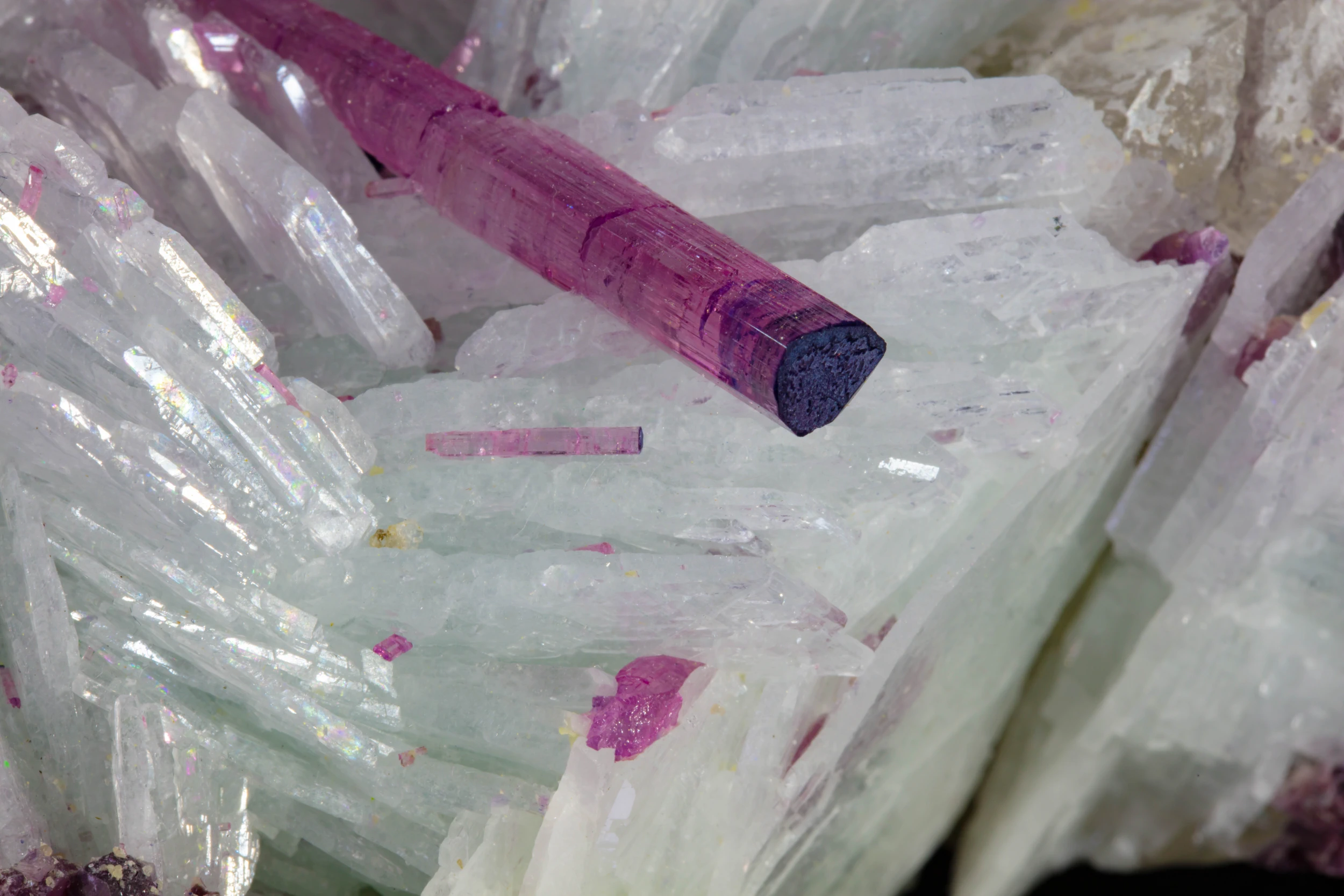
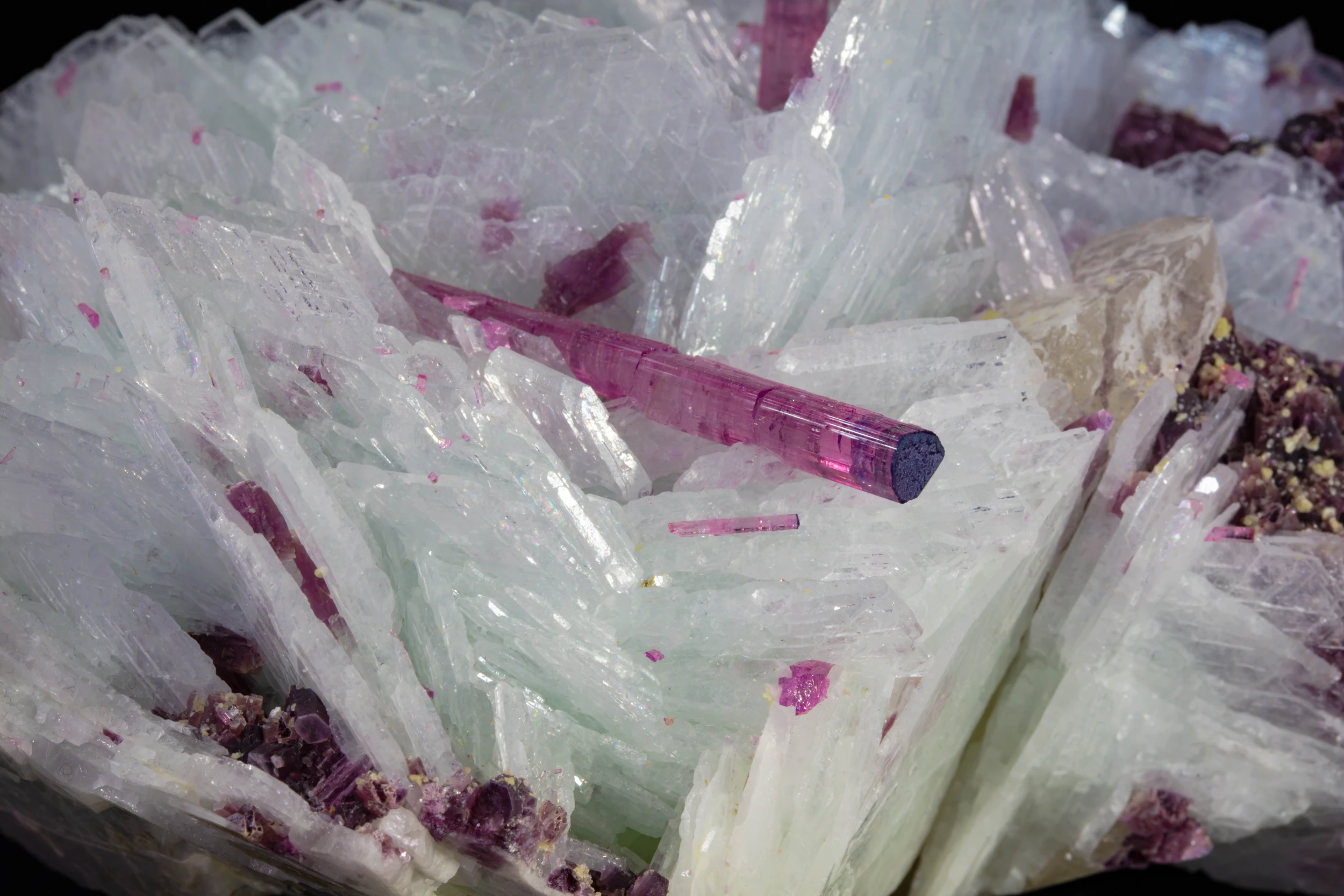
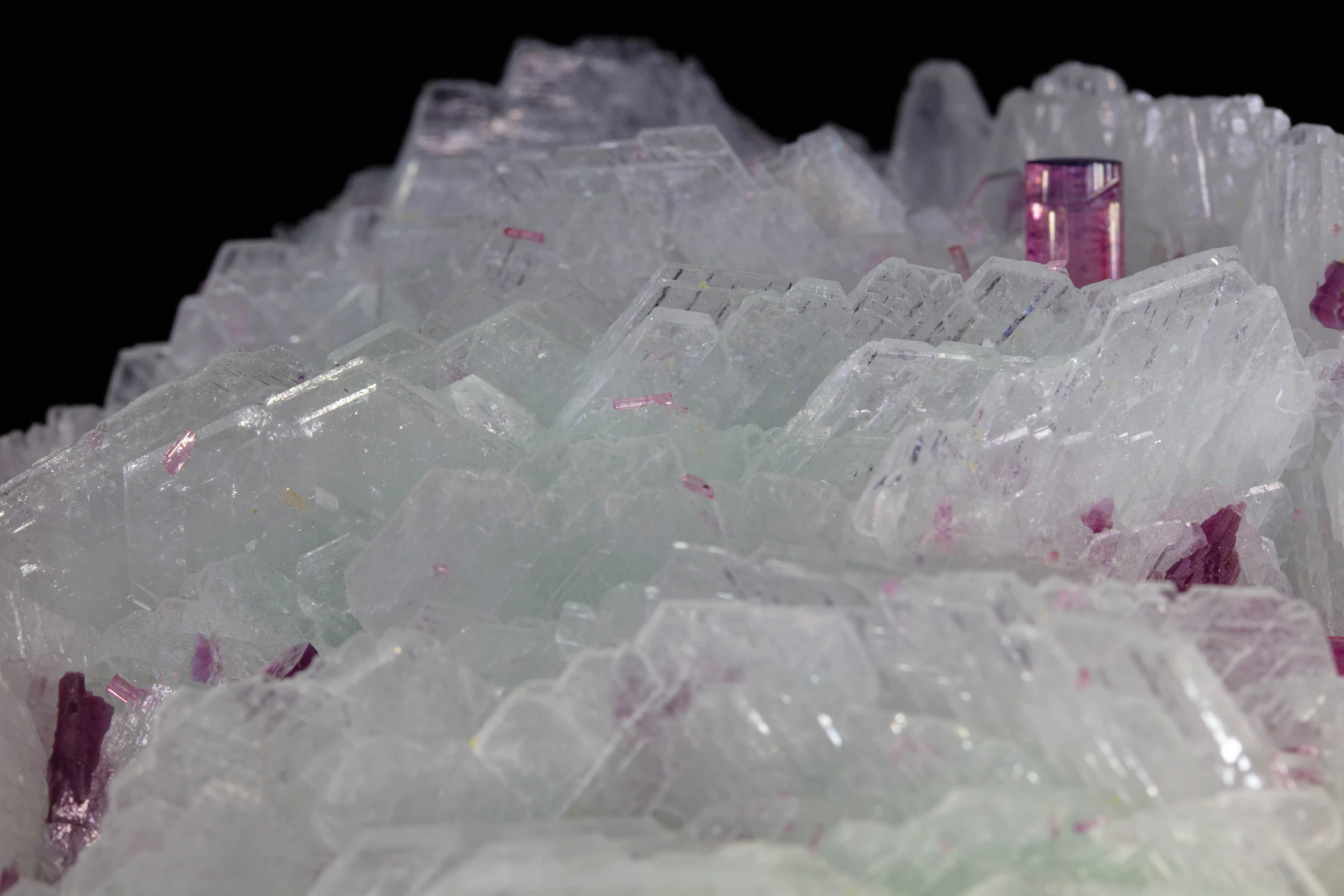
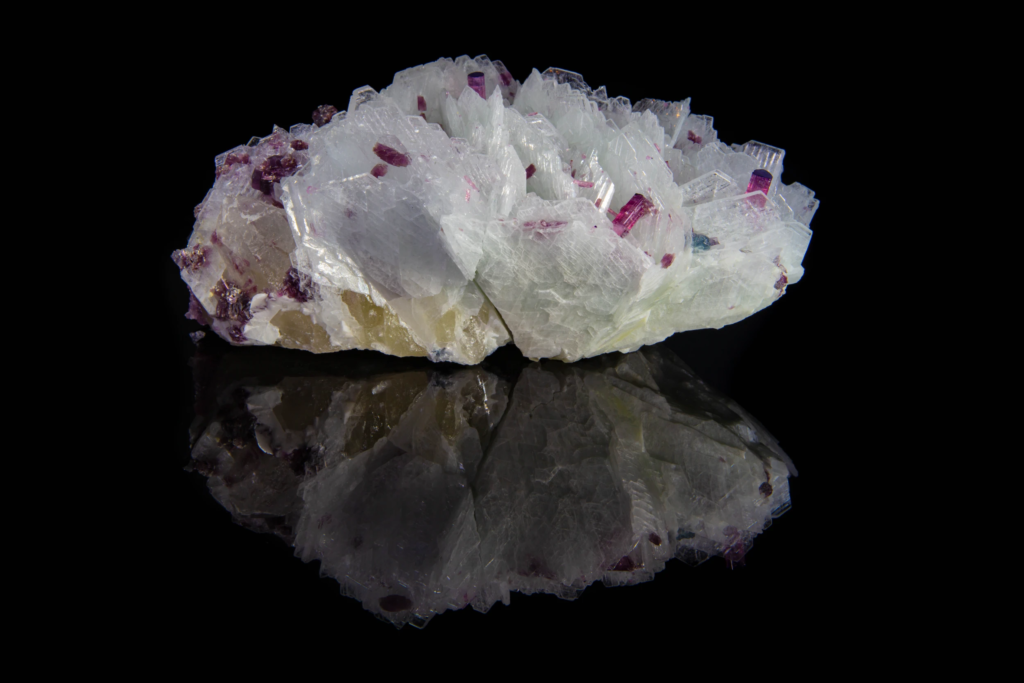
The Specimen
Notes
Mineral Species
NaAlSi3O8
Orthoclase
Talc (1)Diamond (10)
Scratches glass. Harder than a steel knife.
K(Li,Al)3(AlSi3)O10(OH,F)2
Calcite
Talc (1)Diamond (10)
A copper coin can scratch it.
Na(Li,Al)3Al6Si6O18(BO3)3(OH)4
Quartz
Talc (1)Diamond (10)
Very hard. Scratches glass and steel.
Did you know?
CleavelanditeCleavelandite carries a quiet American first. This albite variety was named in 1823 for Parker Cleaveland, who in 1816 had written the very first mineralogy textbook by an American, and the name was coined partly because the mineralogist Brooke thought albite, Latin for white, was a poor name for a stone that is not always white.
RubelliteNot every pink tourmaline earns the name rubellite. Many gem dealers and labs keep the name for stones whose red holds under warm indoor light as well as daylight. A stone that turns brownish or dull under a lamp is usually sold simply as pink tourmaline.