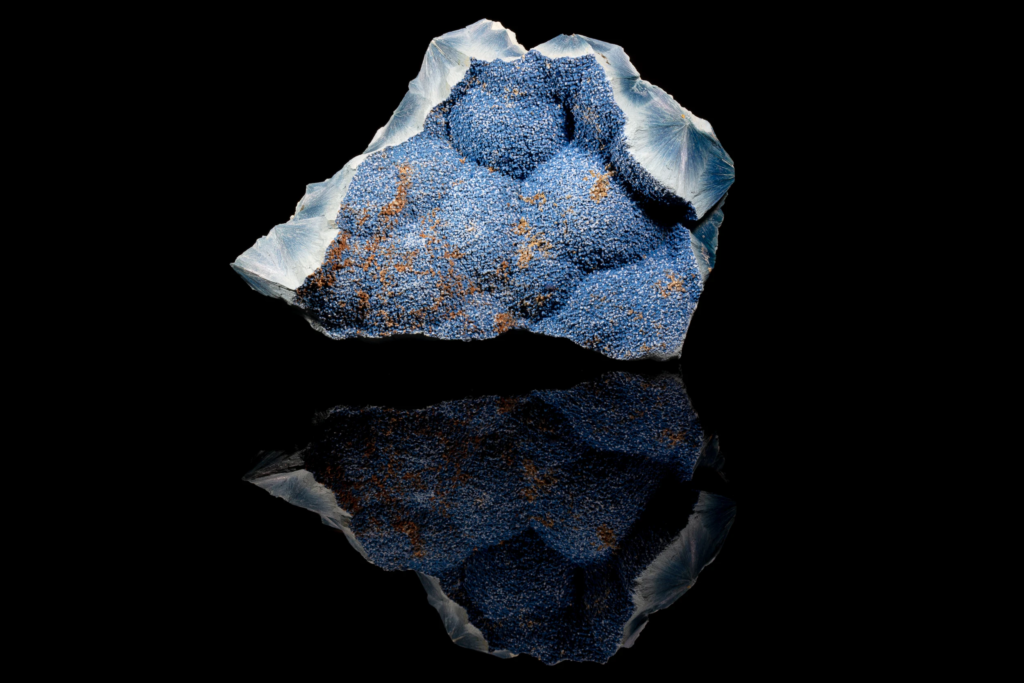
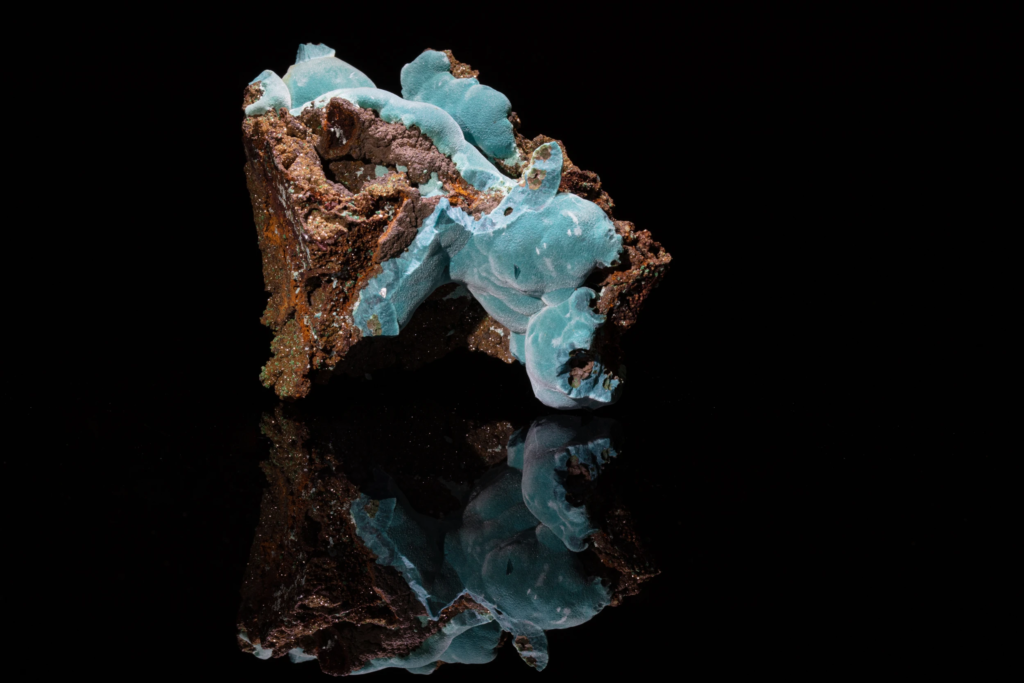
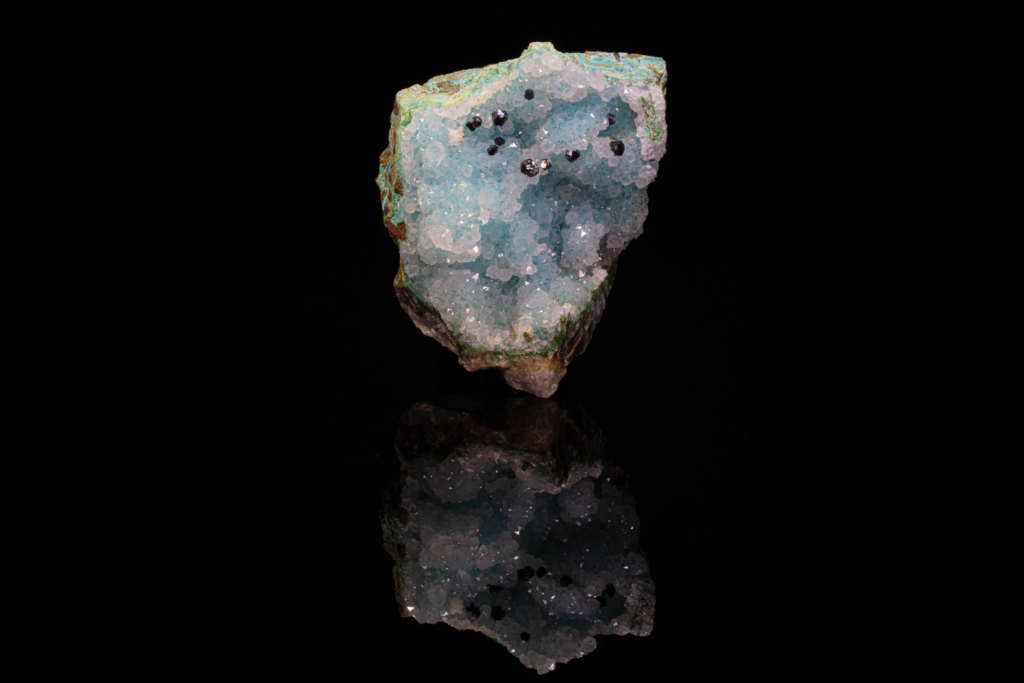
Libethenite on Quartz

The Specimen

Cabinet: Small Cabinet (4.5 - 7 cm) – Size: 8.0 x 5.6 x 1.7 cm Origin: Mostardeira Mine, Glória, Estremoz, Évora – Portugal History: Ex Chet Lemanski Collection

Notes

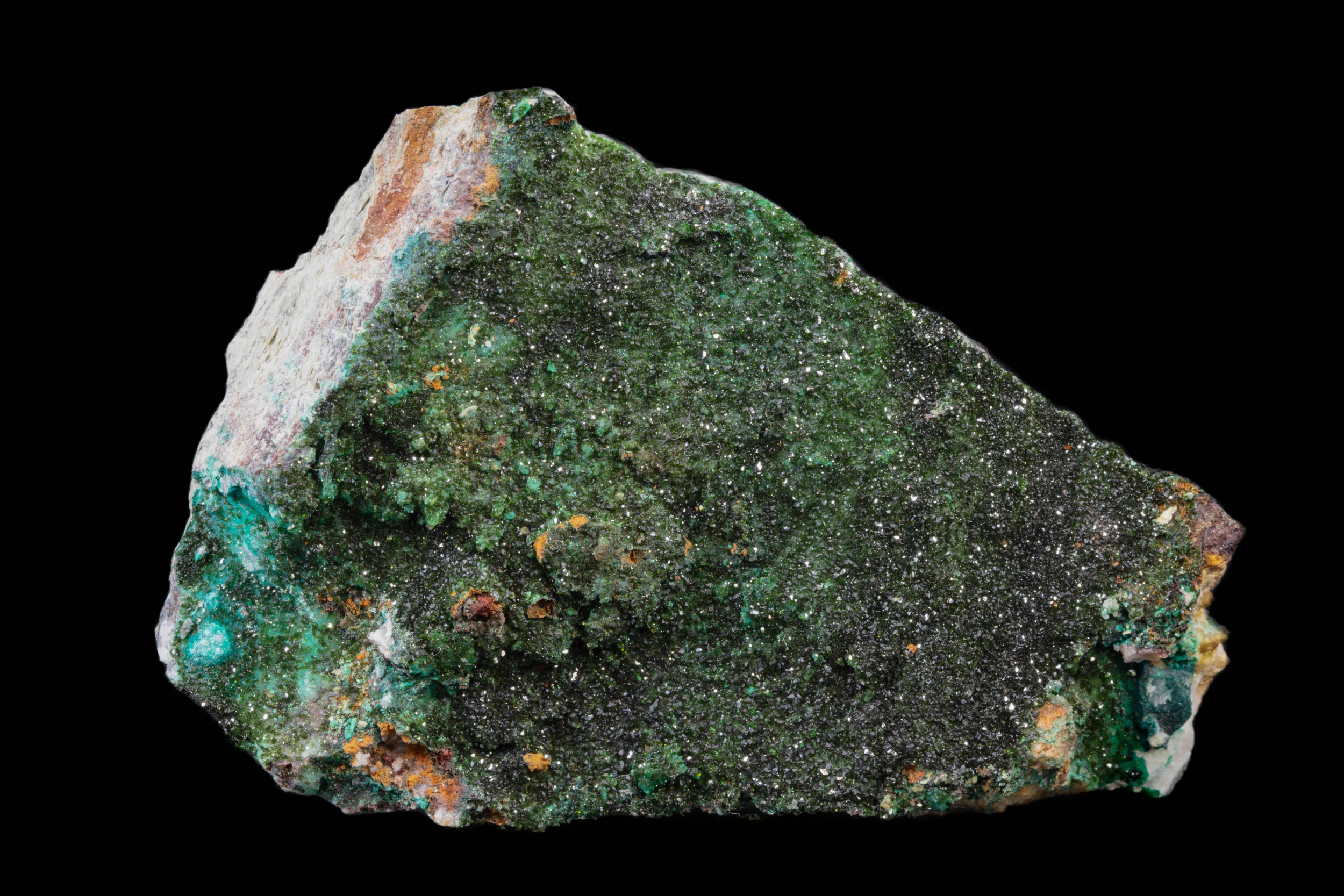
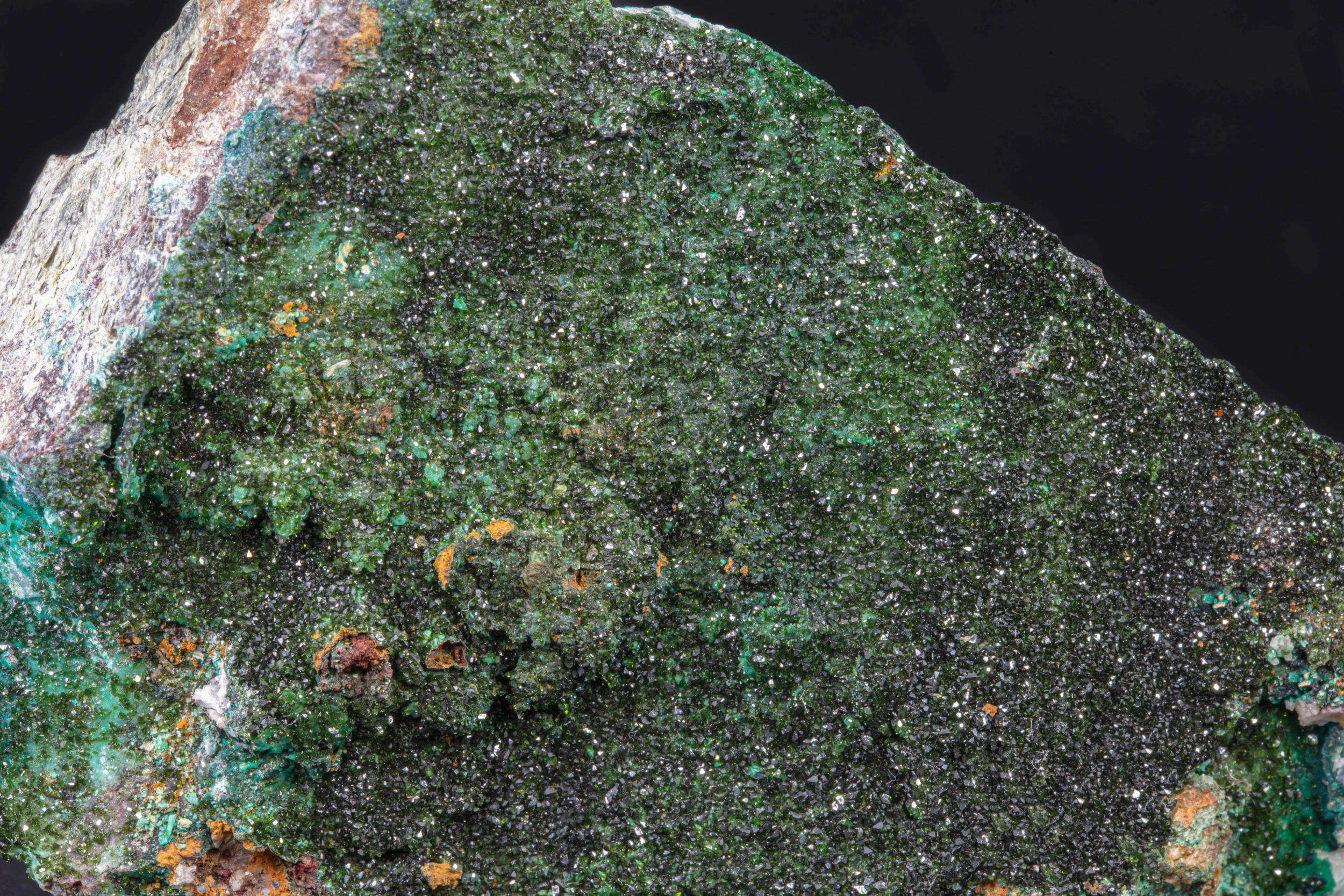
This specimen is labeled from the Mostardeira Mine, near Glória in the municipality of Estremoz, in the Évora District of Portugal. The mine worked copper ore in quartz veins and was probably first found by the Romans. Its modern life was short, from 1861 or 1862 to 1881, because the ore was scarce and low in copper. Mindat notes that libethenite sold under this locality is almost certainly from the nearby Miguel Vacas mine, so the label may name the wrong mine. Libethenite is a copper phosphate hydroxide, named in 1823 after Libethen, the German name of Ľubietová in Slovakia, where it was first found. Here, a sparkling crust of tiny, dark emerald-green libethenite crystals covers almost the whole face of a flat plate. According to the dealer, the matrix is quartz, and the pale rock shows along the upper left edge. A few turquoise-blue spots and small orange-brown spots are scattered across the crust. Goethite is recorded at the mine and is a likely match for the orange-brown spots, but neither has been tested. This piece comes from the collection of Chet Lemanski of Browns Mills, New Jersey, who acquired it in 1996, according to the dealer.

Mineral Species

Did you know?

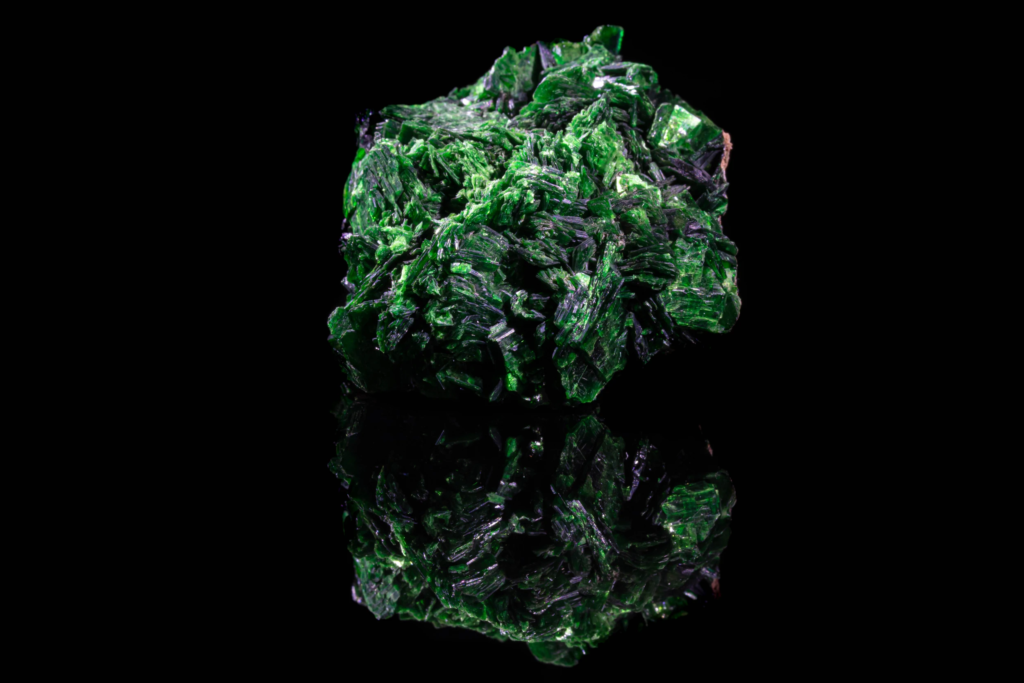
LibetheniteLibethenite mimics the bright green of fine emerald, but its origin is humble: it grows near the surface where acidic water frees phosphorus from old rock and binds it to copper.

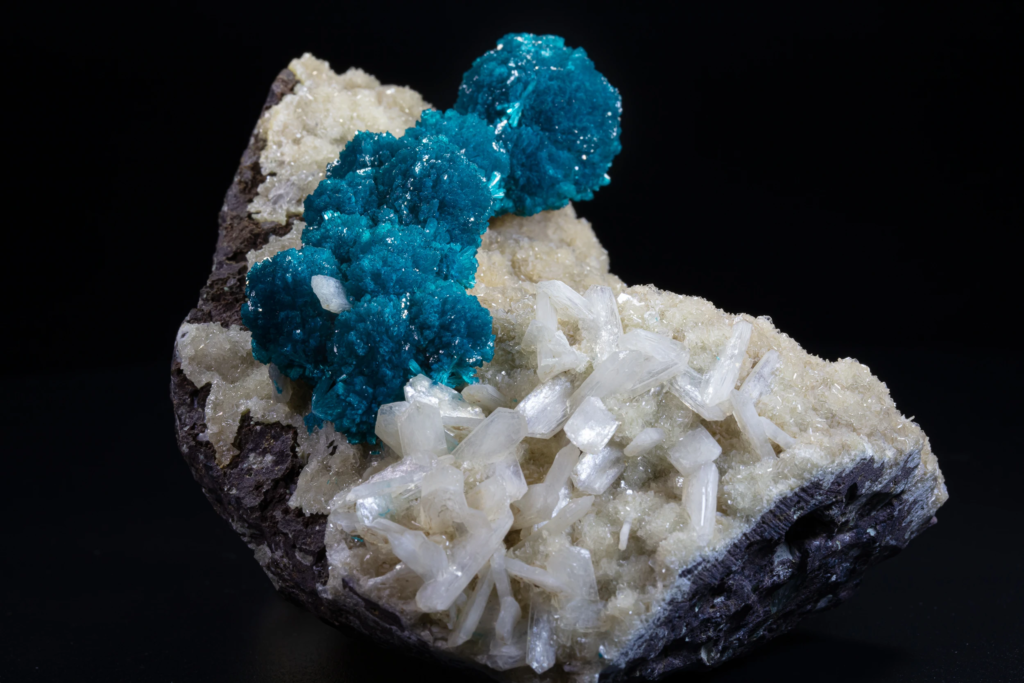
QuartzPressing a quartz crystal makes it give off a precise electric beat, which is why it keeps time in nearly every watch and once tuned the radios of World War II, when good crystals were a strategic resource.