Jagüéite

The Specimen

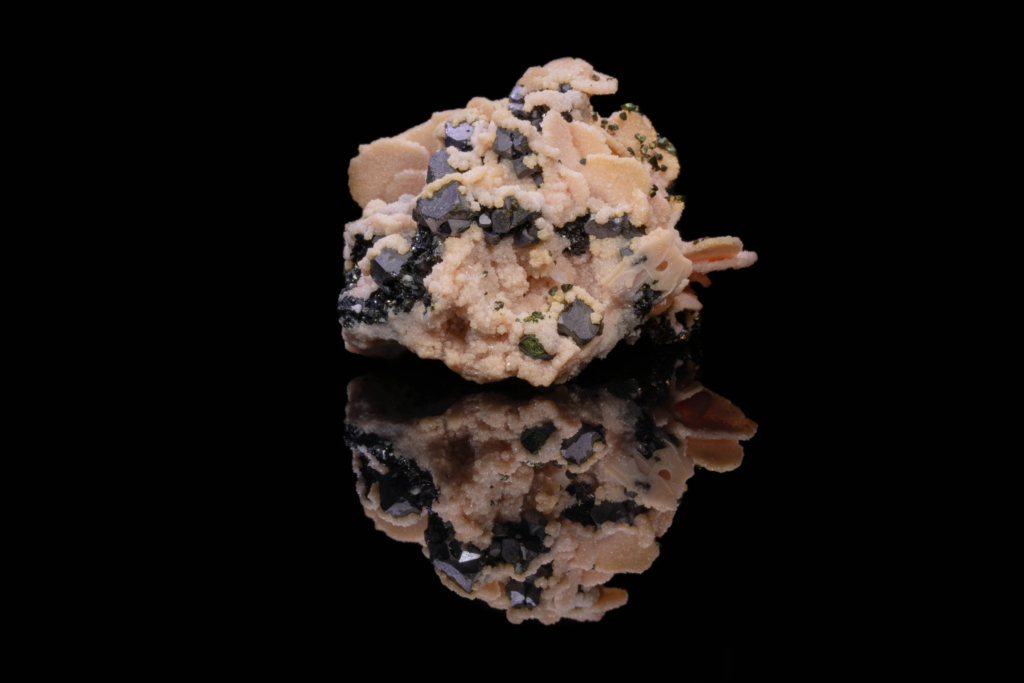
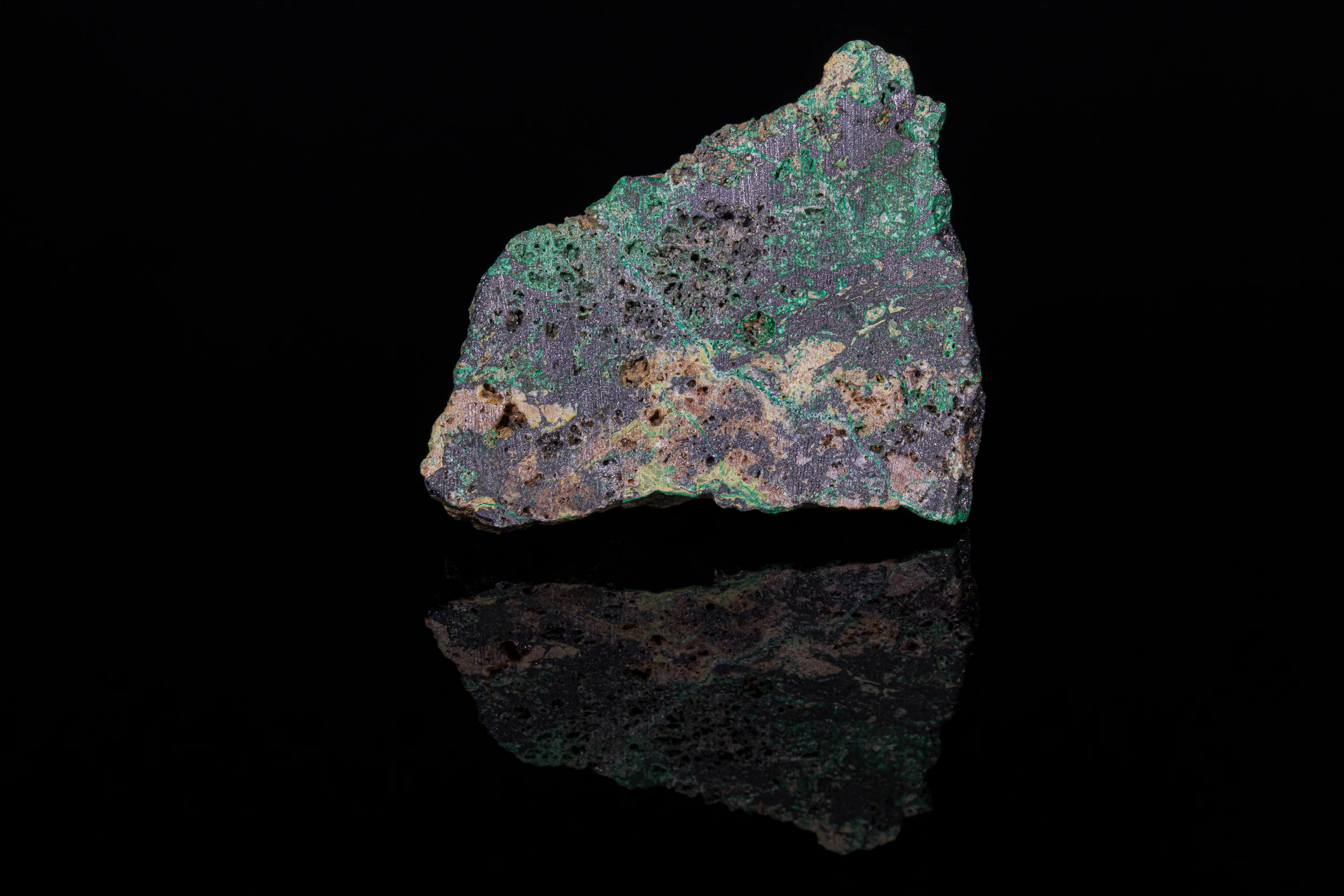
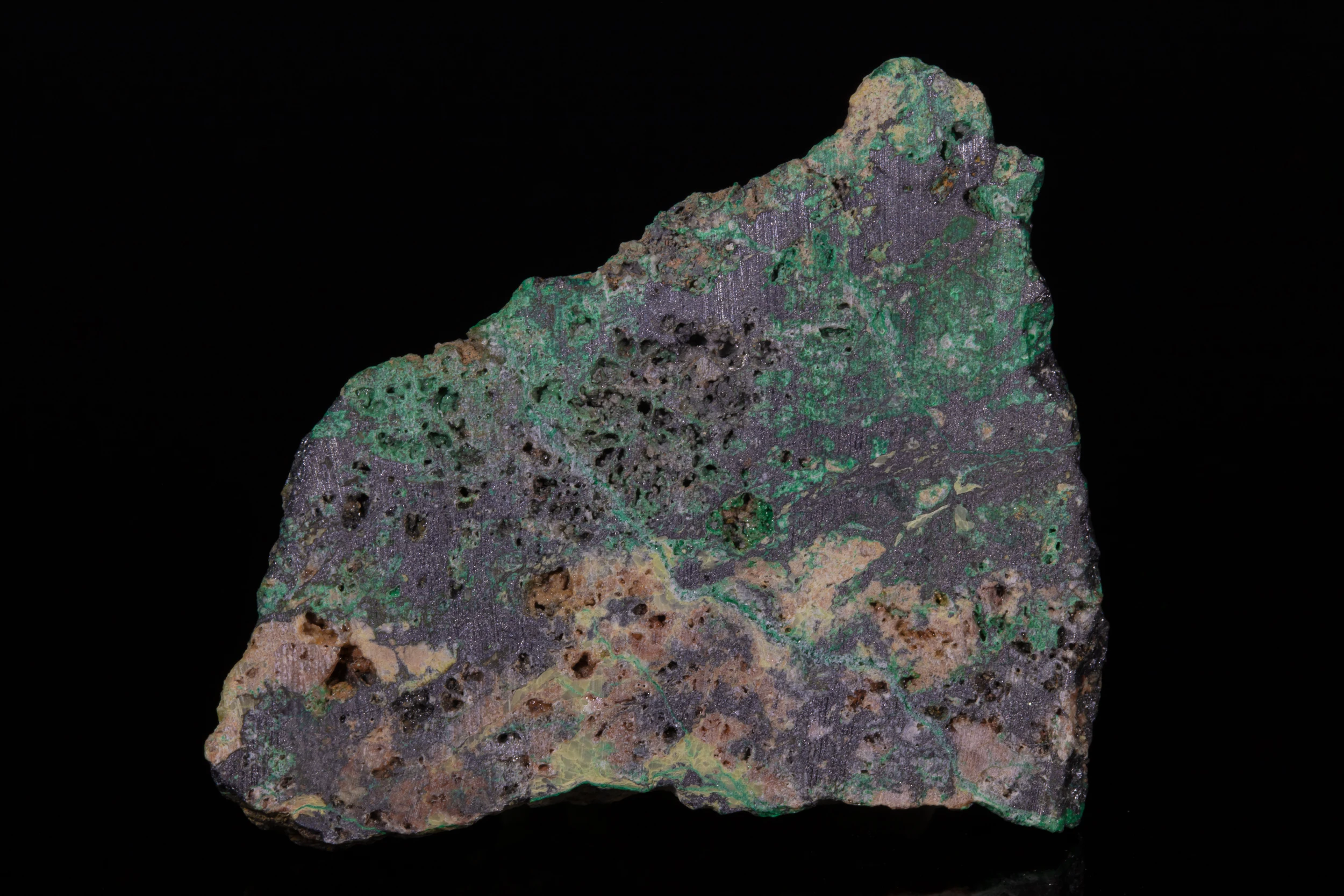
Cabinet: Miniature (2.5 - 4.5 cm) – Size: 4.3 x 3.5 x 0.5 cm Origin: El Chire prospect, General Lamadrid Department, La Rioja Province – Argentina History: Ex University of Salzburg Collection History: Ex Paulo Matioli Collection

Notes

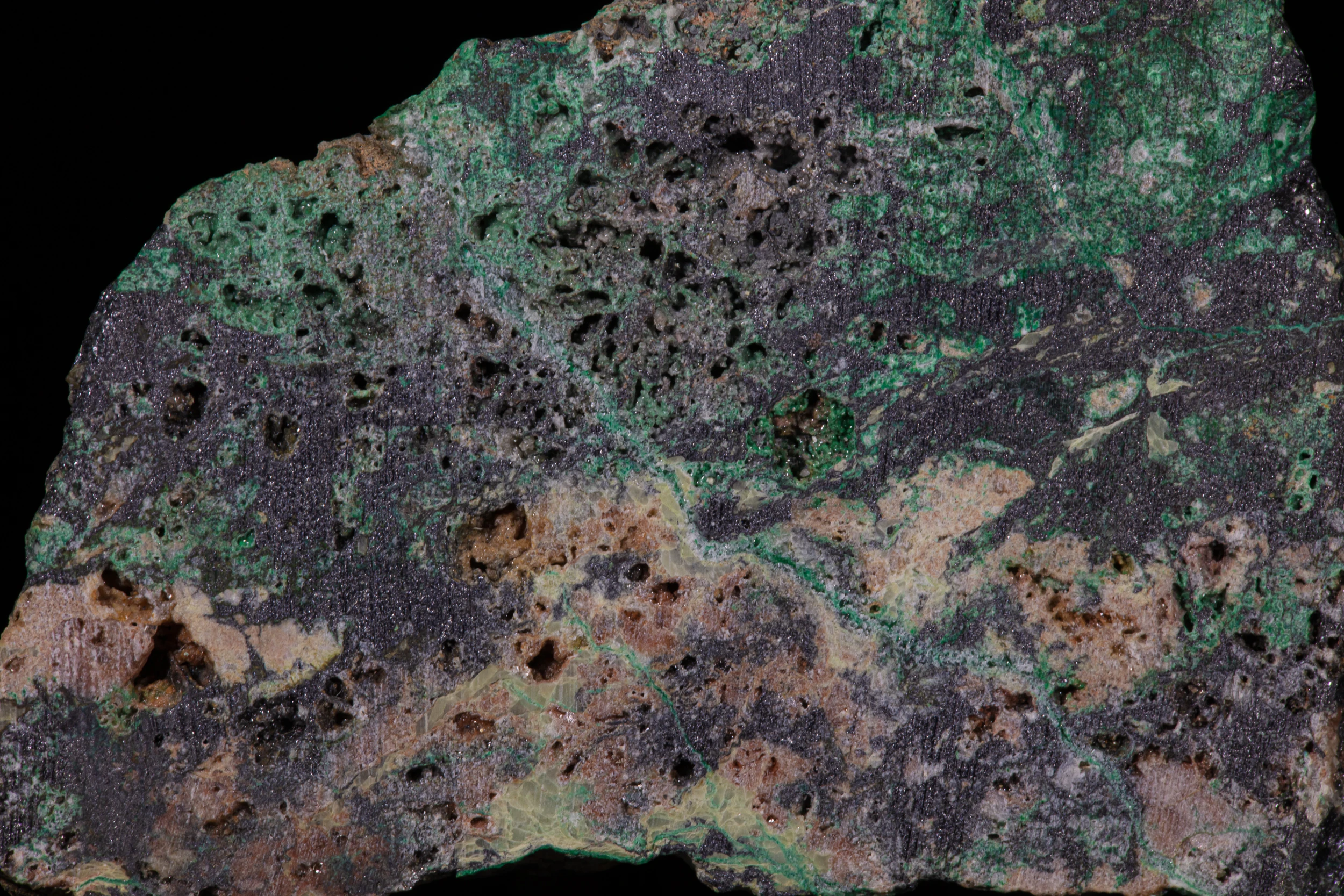
This slab was cut from the El Chire prospect, a small selenium-rich vein in the Los Llantenes district of La Rioja Province, in the Andes of northwestern Argentina, about 30 km northwest of the village of Vinchina. The vein formed at low temperature, far from its heat source, and it carries an unusual set of selenides: minerals in which selenium takes the place that sulfur holds in common ores. El Chire is the type locality of jagüéite, a copper palladium selenide described in 2004 by a team led by Werner Paar of the University of Salzburg. It is named after Jagüé, the closest village to the prospect, and its spelling changed from jaguéite to jagüéite in 2010. Despite the dealer's note, it is a fully approved species. Jagüéite is the copper version of chrisstanleyite, a silver palladium selenide first found at Hope's Nose in England, and at El Chire the two grow tightly together. Both stay tiny: the largest intergrowths measured in the original study are about a tenth of a millimeter. On this slab they are hidden inside the dark gray to black metallic areas, which are a mix of several selenides that cannot be told apart without a reflected-light microscope. The sawn face shows these dark selenide patches, with small cavities, set in pale pink to beige calcite. Green copper minerals coat parts of the surface, mostly along the top and in cracks. The label names two of them: malachite, and chalcomenite, a rare blue copper selenite that forms when copper selenides weather. According to the dealer, all five species are listed on the label of Paulo Matioli, a Brazilian collector and museum founder honored by the mineral matioliite. Before him, the piece belonged to the University of Salzburg, from the laboratory of Werner Paar, and left it through an exchange.

Mineral Species

Did you know?

JagüéiteJagueite, from a remote village in the Argentine Andes, carries a quiet bit of cosmic poetry in its formula: it pairs palladium and selenium, two elements named for the asteroid Pallas and for the Moon.

MalachiteThe malachite columns and vases in Russia's imperial palaces look carved from solid blocks of green stone. They are not: each is a mosaic of paper-thin slices fitted so precisely that the banding runs unbroken, a craft known as Russian mosaic.

CalciteLook through a clear rhomb of Iceland spar calcite and the world doubles, split into twin images by the crystal's double refraction. Some researchers think Norse sailors used this very effect to find the sun through cloud, the so-called sunstone, though the idea remains a debated hypothesis.